
How to Price for Events Without Losing Weekday Bookings
Event demand is an opportunity—but only when it improves the whole stay pattern.
A concert, tournament, convention, graduation, or festival can transform demand overnight. The obvious response is to raise rates. The more important task is to shape which nights get booked, for how long, and at what total value.
Aggressive event pricing can produce an impressive Saturday rate while leaving Tuesday through Thursday empty. It can also block the longer, higher-value reservation that would have included the event night.
Do not optimize the peak night. Optimize the revenue opportunity around it.
Start with the demand window
The event date is not necessarily the demand window. Map when guests are likely to arrive and depart.
- A Saturday concert may create Friday and Saturday demand.
- A weekday convention may support Sunday through Thursday stays.
- A tournament can create three- or four-night family bookings.
- Graduation may compress demand into one night while creating early planning.
Review prior-year pace, current search activity, comparable availability, the event schedule, venue distance, and the normal booking window for your property. Separate evidence from assumption.
Use a pricing ladder, not one dramatic increase
Event pricing should change as confidence increases.
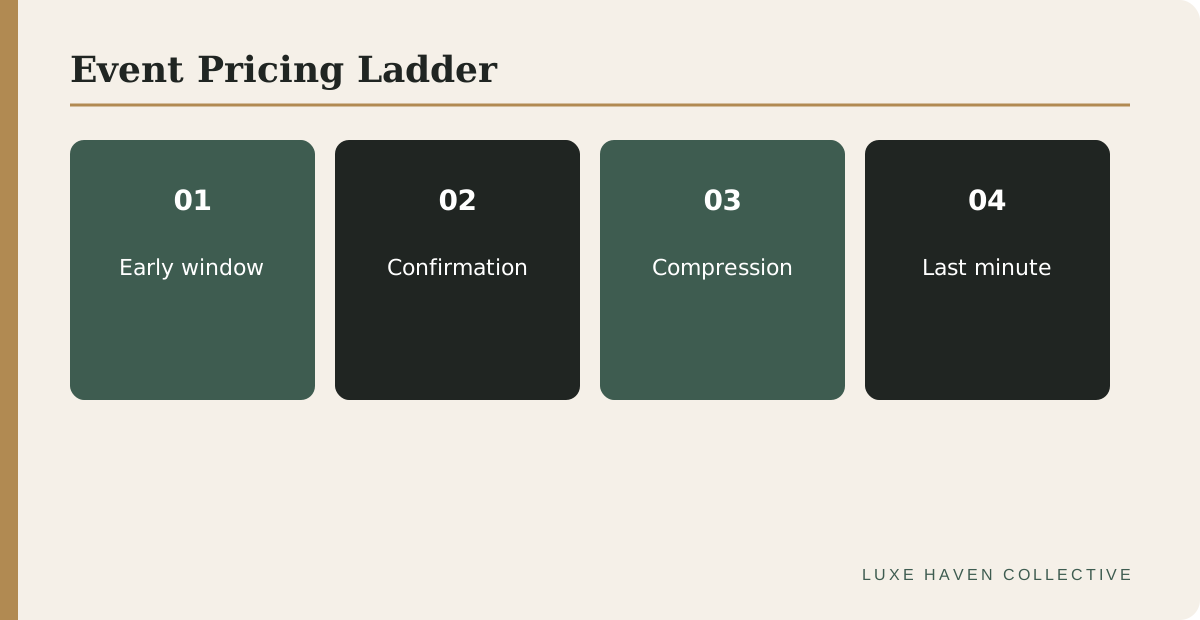
Early window: protect flexibility
Open at a measured premium. Keep enough availability to capture longer stays and avoid imposing restrictions before demand is proven.
Confirmation window: respond to pace
If bookings and market compression are developing as expected, increase the premium gradually. If pace is weak, adjust sooner rather than defending an aspirational rate.
Compression window: price scarcity
When quality comparable inventory is genuinely limited, the remaining nights can carry a stronger premium. Scarcity should be observed, not imagined.
Last-minute window: choose deliberately
Decide whether the goal is rate protection or occupancy. A modest targeted adjustment is usually better than a steep discount that trains the market to wait.
Protect the shoulders
The nights before and after the event are “shoulder nights.” They often determine whether the event actually improves monthly performance.
Use several levers:
- Apply the largest premium to the true peak nights.
- Use smaller premiums on adjacent nights.
- Offer a length-of-stay discount that rewards adding a shoulder night without discounting the peak below its value.
- Avoid arrival or departure restrictions that make natural stay patterns impossible.
- Consider a two-night minimum only when demand evidence supports it.
- Release minimum stays as the booking window closes if they are blocking conversion.
A three-night reservation at a blended rate may outperform a one-night peak booking after cleaning cost, vacancy risk, and channel fees are considered.
Evaluate total reservation value
Compare opportunities using more than ADR.
Net reservation value = lodging revenue − channel costs − variable operating costs − displacement cost
Displacement cost matters. Accepting a short event booking early may prevent a longer business, relocation, or leisure stay from booking the same dates.
Review:
- Total lodging revenue
- Average nightly rate
- Length of stay
- Cleaning and turnover burden
- Booking-channel cost
- Probability of filling orphan nights
- Cancellation terms and risk
Keep weekday pricing grounded in weekday demand
Do not let a Saturday event contaminate unrelated weekdays. If Monday and Tuesday demand has not changed, an across-the-board event premium can suppress conversion.
Maintain weekday base-rate logic, then add only the uplift supported by the event’s actual travel pattern. For business-oriented events, weekday demand may be the center of the opportunity. For leisure events, it may remain mostly unchanged.
Watch the right signals
Event pricing should be monitored as a small revenue experiment.
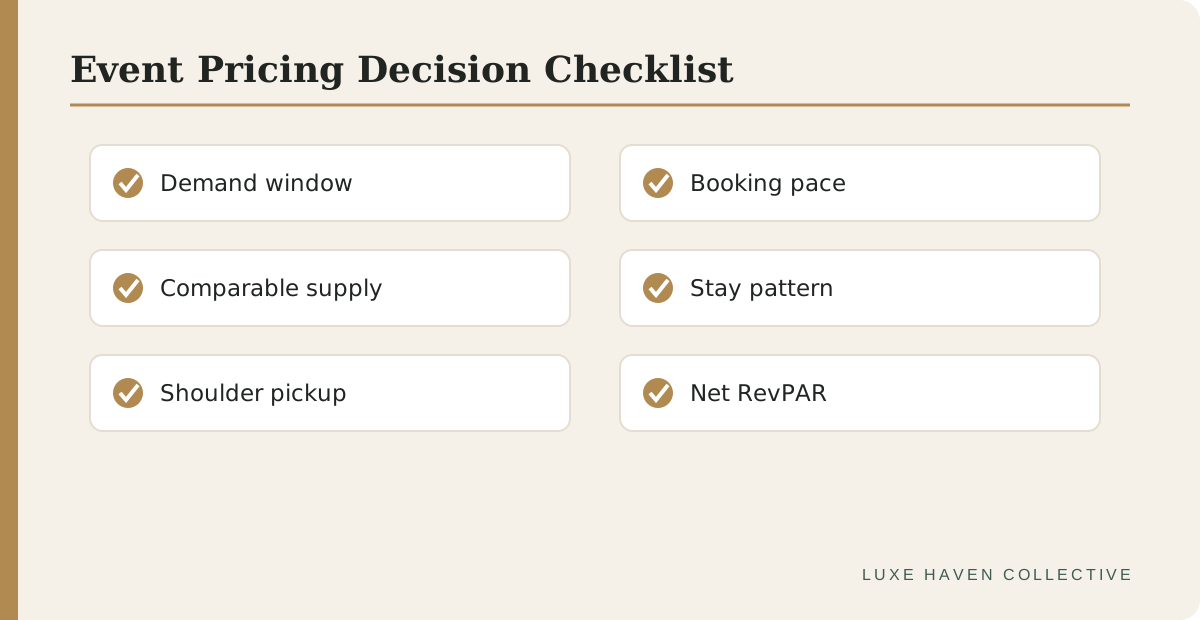
Track:
- Booking pace versus your normal curve
- Comparable availability and price
- Conversion or inquiry activity
- Length-of-stay mix
- Shoulder-night pickup
- Cancellations
- Net RevPAR across the full event window
Avoid copying the highest visible competitor. An unbooked listing is not proof of achievable demand.
Common mistakes
- Raising every night equally
- Setting minimum stays too early
- Ignoring the event’s arrival and departure pattern
- Measuring success by peak-night ADR alone
- Waiting too long to respond to weak pace
- Discounting the peak when the shoulder is the real problem
- Treating every annual event as if demand will repeat exactly
How Luxe Haven Thinks About Event Pricing
Traditional revenue management asks:
How high can we price the event night?
Hospitality Performance Management asks:
What combination of price, stay pattern, and restrictions produces the strongest net outcome across the demand window?
The second question protects both revenue and occupancy. It turns event pricing from a reaction into a deliberate decision.
Key Takeaways
- Define the full demand window before changing rates.
- Use gradual premiums tied to observed pace.
- Protect shoulder nights with targeted length-of-stay strategy.
- Compare net reservation value—not just ADR.
- Measure the entire event window with net RevPAR.