
What Investors Look for in Short-Term Rentals
A beautiful property is not an investment thesis.
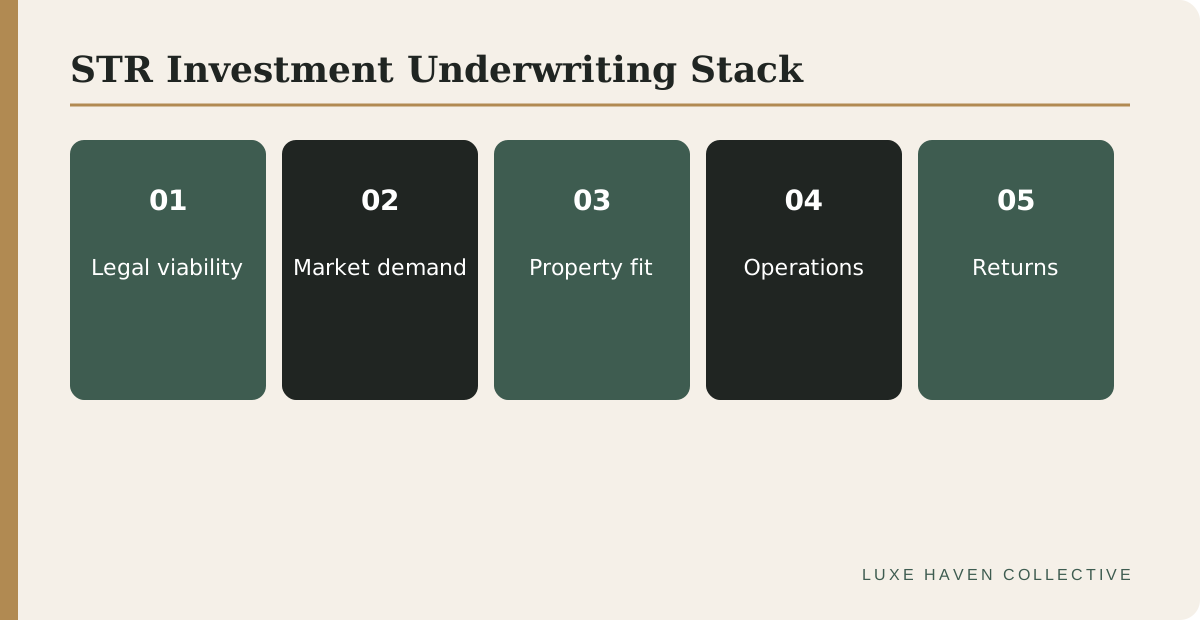
Strong short-term-rental investors look beyond projected nightly rate and occupancy. They want to know whether demand is durable, operations are feasible, regulation is survivable, and returns remain acceptable when assumptions are wrong.
The objective is not to prove that a deal works. It is to discover what must be true for the deal to work—and how likely those conditions are to hold.
Investors underwrite the property, the market, and the operating system required to connect them.
1. Legal and regulatory viability
The first question is whether the intended use is allowed.
Review:
- City and county short-term-rental rules
- Zoning and occupancy restrictions
- Permit, license, inspection, and renewal requirements
- Hotel, lodging, and sales taxes
- HOA, condominium, deed, and lease restrictions
- Parking, noise, trash, signage, and safety standards
- Pending rule changes and enforcement history
Do not rely on the existence of nearby listings as proof. A comparable may be grandfathered, noncompliant, or operating under different rules.
2. Demand quality
Investors want demand that is diversified and understandable. Identify the reasons guests travel, how often those reasons occur, and which segments fit the property.
Look for a mix of:
- Leisure attractions
- Business and institutional demand
- Medical, university, government, or military activity
- Events and group travel
- Visiting friends and relatives
- Relocation, insurance, and mid-term demand
A market dependent on one seasonal event or employer carries concentration risk.
3. Competitive position
Comparable analysis should reflect the guest’s actual alternatives—not every rental in the ZIP code.
Compare properties with similar:
- Location and drive-time relevance
- Bedroom, bathroom, and guest capacity
- Property type and quality
- Amenities and parking
- Review strength and operating maturity
- Stay restrictions and target segments
Separate achieved performance from advertised rates. A high asking price does not mean it books.
4. Conservative revenue potential
Build scenarios rather than one forecast.
Model a base case, downside case, and credible upside case using:
- Monthly ADR and occupancy
- Day-of-week and seasonal patterns
- Event uplift without double counting
- Length of stay and booking lead time
- Channel mix and fees
- Cleaning-fee treatment
- Ramp-up time for a new listing
- Owner blocks and downtime
The downside case should reflect plausible pressure—not an arbitrary percentage reduction.
5. Complete operating costs
Gross revenue is not return. Include:
- Property taxes and STR-appropriate insurance
- Utilities and internet
- Cleaning and laundry economics
- Consumables and guest supplies
- Platform and payment fees
- Management or labor cost
- Landscaping, pool, pest, and specialized services
- Repairs, maintenance, and capital reserves
- Permits, licenses, accounting, and software
- Furniture and equipment replacement
Model fixed and variable costs separately so occupancy changes behave realistically.
6. Property-level operating fit
Some properties are expensive or difficult to operate despite strong demand. Investors inspect:
- Bed and bath configuration
- Parking and access
- Noise sensitivity and neighbor exposure
- Durable finishes and maintainability
- HVAC, plumbing, roof, foundation, and major systems
- Safety and code readiness
- Storage for owner and operations supplies
- Cleaner and vendor access
- Amenity maintenance burden
Every special feature should have both a revenue hypothesis and an operating-cost estimate.
7. Return and capital structure
Investors evaluate multiple outcomes:
- Net operating income
- Capitalization rate
- Cash-on-cash return
- Debt-service coverage
- Break-even occupancy
- Total cash required
- Payback period for furnishings and improvements
- Sensitivity to rate, occupancy, costs, and financing
Cash-on-cash return can look attractive while reserves are understated. Cap rate can hide financing risk. No single metric carries the whole decision.
8. Risk and exit flexibility
A resilient deal has options. Consider whether the property can support long-term or mid-term rental, owner occupancy, or resale to a broad buyer pool. Evaluate liquidity, neighborhood trajectory, insurance exposure, tax reassessment, and dependence on a single booking channel.
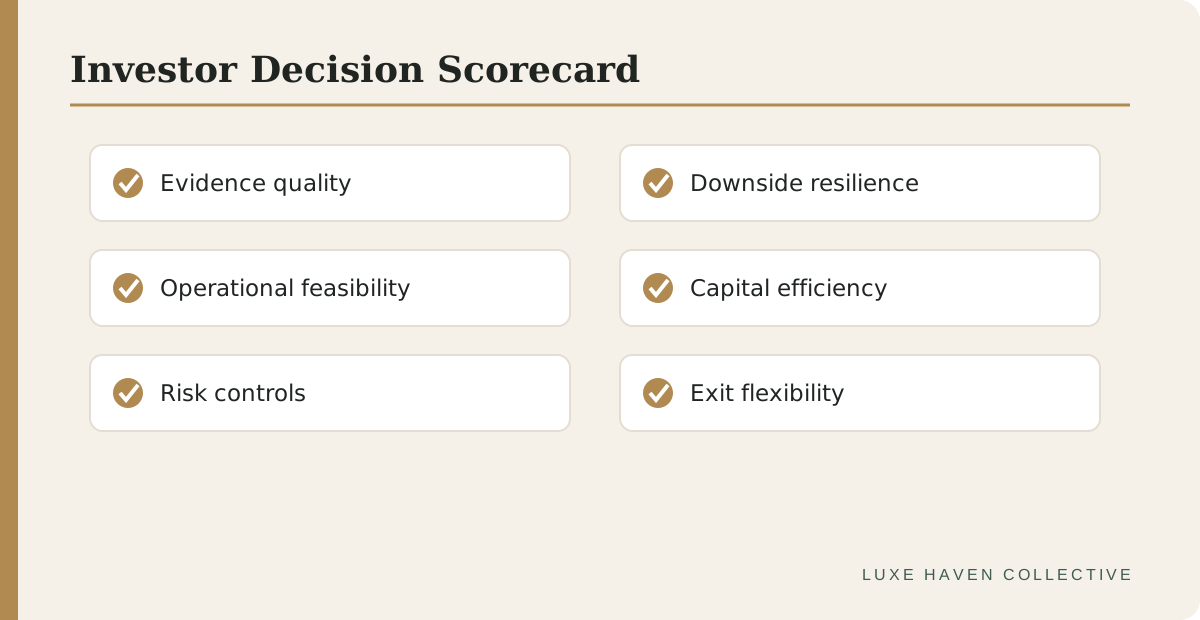
Before proceeding, identify:
- The three assumptions with the greatest impact
- The earliest signals that an assumption is failing
- The action available if performance misses plan
- The conditions that would cause you to walk away
How Luxe Haven Thinks About Investment Intelligence
Traditional analysis asks:
Can this property produce an attractive return?
Hospitality Performance Management asks:
What evidence supports the return, what operating capabilities does it require, and how will we detect when the thesis changes?
The investment decision does not end at acquisition. Actual operating results should continuously test the original assumptions.
Investor Due Diligence Checklist
- Confirm legal use with primary sources and qualified professionals.
- Define the property’s target guest segments.
- Select truly comparable properties.
- Build monthly base, downside, and upside scenarios.
- Include every recurring and replacement cost.
- Inspect the property for operational friction.
- Calculate break-even occupancy and debt coverage.
- Stress-test the most sensitive assumptions.
- Define an exit or alternate-use strategy.
- Record the evidence, gaps, and decision rationale.
Key Takeaways
- Legal viability comes before revenue potential.
- Durable, diversified demand is more valuable than one strong season.
- Conservative scenarios reveal what must be true.
- Complete costs and operational fit determine real returns.
- The best acquisitions remain resilient when assumptions change.