
Your Guidebook Is Your Silent Guest Service Team
The best guest questions are the ones your property answers before they are asked.
A guidebook is often treated like a digital house manual: Wi-Fi, checkout time, and a list of nearby restaurants. That is useful, but it misses the larger opportunity.
Your guidebook can operate as a silent guest service team—available before arrival, present throughout the stay, and consistent at every touchpoint. It reduces uncertainty without making the experience feel automated. It helps guests make decisions confidently, while protecting your team from repetitive questions and preventable service failures.
A great guidebook does not simply store information. It anticipates the guest's next decision.
Design it around the guest journey
Guests rarely want to read an entire manual. They want the right answer at the exact moment they need it. Organize the guidebook around the stay rather than around your internal operations.
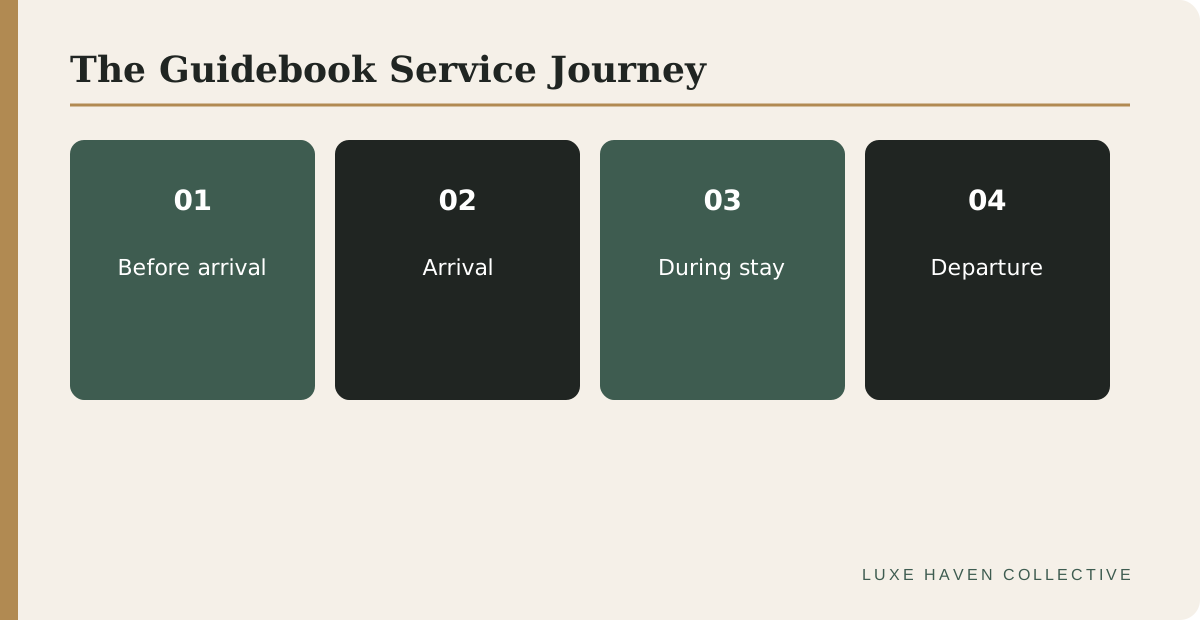
Before arrival
Reduce arrival anxiety with:
- A confirmed address and map link
- Parking instructions with a photo or landmark
- Check-in time and early-arrival policy
- Entry steps in the order guests will complete them
- What is provided—and what they should bring
- A single contact path if something goes wrong
During the stay
Make the property easy to use:
- Wi-Fi details near the top
- Simple instructions for thermostats, TVs, appliances, and amenities
- Trash, recycling, pet, pool, or fireplace rules
- Troubleshooting steps for the most common issues
- Curated food, coffee, grocery, and activity recommendations
- Emergency and urgent-care information
Before departure
Keep checkout short and respectful. Guests should not discover a long chore list on their final morning. State the checkout time, identify only the essential tasks, explain where to leave vehicles and keys, and tell guests what happens next.
Answer questions in the order they occur
Information architecture matters. If the Wi-Fi password is buried under “Property Information,” the answer technically exists but the service design has failed.
A useful default order is:
- Start here
- Arrival and access
- Wi-Fi and property essentials
- How to use the home
- Local recommendations
- House expectations
- Help and emergencies
- Checkout
Use plain labels, short sections, searchable language, and visual instructions where words are not enough. The guest should not need to understand your business vocabulary to find an answer.
Make recommendations feel hosted
A generic directory does not create much value. Guests can search the internet themselves. Your advantage is judgment.
Recommend fewer places, but explain why each one earns a spot. Identify the best nearby breakfast, the reliable late-night option, the grocery store that is easiest after check-in, a rain-day activity, and the restaurant worth driving across town for. Include distance, reservation guidance, accessibility notes, and the type of guest each recommendation suits.
This is where a guidebook becomes hospitality rather than documentation.
Build a service-recovery layer
Not every issue needs a message thread. Add concise self-service support for common friction:
- The lock code is not working
- The Wi-Fi will not connect
- The thermostat is not responding
- The television has no signal
- A breaker or GFCI outlet has tripped
- The guest cannot find extra linens or supplies
Give one or two safe steps, then make escalation obvious. Never use the guidebook to hide access to a real person.
Self-service is helpful only when human help remains easy to reach.
Keep it accurate—or it becomes a liability
An outdated guidebook damages trust faster than having no guidebook at all. Assign an owner and a review cadence.
Review the guidebook when:
- Access instructions change
- An amenity is added or removed
- A guest asks a question the guide should have answered
- A recommended business closes or changes hours
- A house rule or local regulation changes
- Seasonal conditions affect the stay
Track repeated guest questions. They are not just interruptions; they are signals that the information experience needs improvement.
How Luxe Haven Thinks About Guidebooks
Traditional guidebooks ask:
What information should we give the guest?
Hospitality Performance Management asks:
What decisions will the guest need to make, and how can the property make those decisions easier?
That shift connects guest experience with operations. Fewer preventable questions reduce response burden. Clearer instructions protect the property. Better local guidance increases satisfaction. The guidebook becomes a measurable service system.
Guidebook Quality Checklist
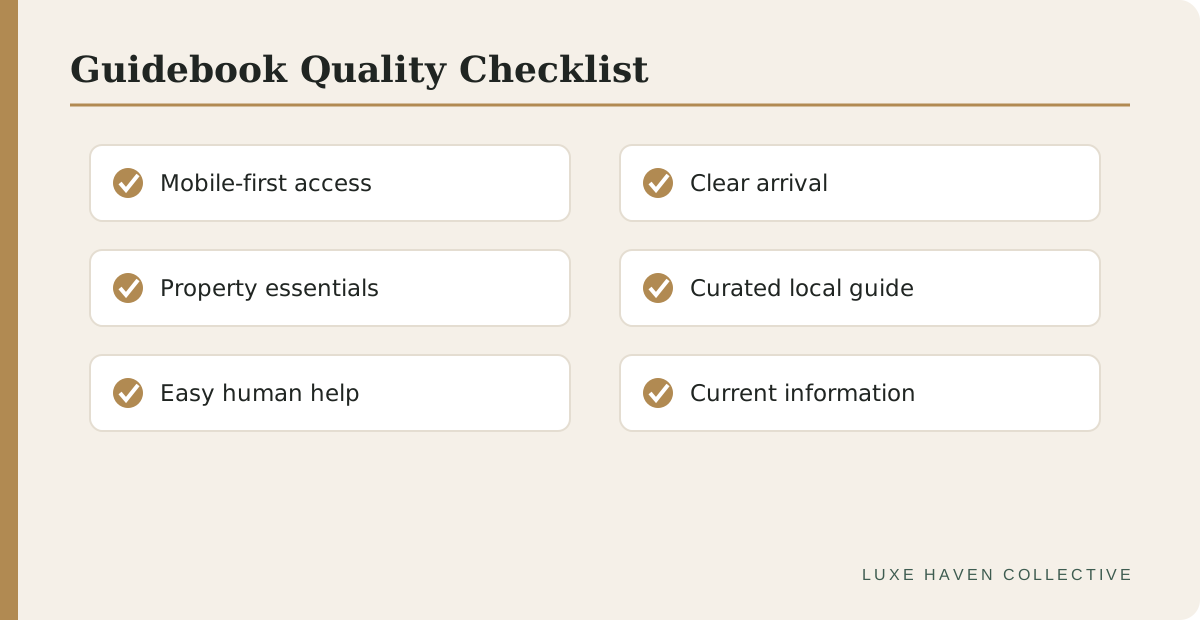
- Open every link on a phone.
- Test arrival instructions with someone unfamiliar with the property.
- Place the five most-used answers within two taps.
- Replace operational jargon with guest language.
- Add photos where sequence or location matters.
- Keep checkout expectations brief and visible before booking.
- Review repeated questions monthly.
- Assign one person to approve updates.
Key Takeaways
- A guidebook should anticipate decisions, not archive information.
- Organize content around the guest journey.
- Curated recommendations should express real judgment.
- Troubleshooting should support—not replace—human service.
- Guest questions are data for continuous improvement.
Create a guidebook that supports every stay with Luxe Haven Guidebook Studio. →