Dynamic Pricing Strategies That Actually Work
Why better pricing begins with better decisions
Raise your price. Lower your price. Match the market. Install dynamic pricing software.
If you spend enough time around short-term rentals, you will hear every version of this advice. Pricing has become one of the most discussed—and most misunderstood—parts of hospitality performance.
Dynamic pricing is often reduced to a simple idea: change nightly rates as demand changes. That matters, but it is only one part of a complete revenue system.
Professional operators do not begin with, “What should I charge tonight?”
They begin with a better question:
What is this stay worth to the right guest, in this market, under today’s conditions?
That question moves pricing from reaction to strategy.
At Luxe Haven, we think about pricing as part of Hospitality Performance Management: a continuous process of seeing what is happening, understanding why it matters, deciding what to change, executing deliberately, and learning from the result.
The objective is not to squeeze the highest possible price out of every peak night. It is to build a pricing system that captures demand, protects positioning, supports operations, and improves over time.
Pricing is a signal, not just a number
Every rate communicates something.
Guests begin making assumptions before they finish reading your listing. A premium nightly rate can suggest quality, confidence, and a differentiated experience. A deeply discounted rate can make a guest question why the property is cheaper than the alternatives.
Neither premium nor value pricing is inherently right. The important question is whether the price matches the experience.
A property with strong design, thoughtful amenities, excellent reviews, and reliable service should not automatically compete with every property that shares its bedroom count. At the same time, a property cannot sustain premium pricing simply because the owner wants it to feel premium.
Pricing should reinforce the position you have earned.
Guests compare value—not price.
The four drivers of great pricing
Strong pricing decisions balance four forces: demand, positioning, market context, and operational reality.
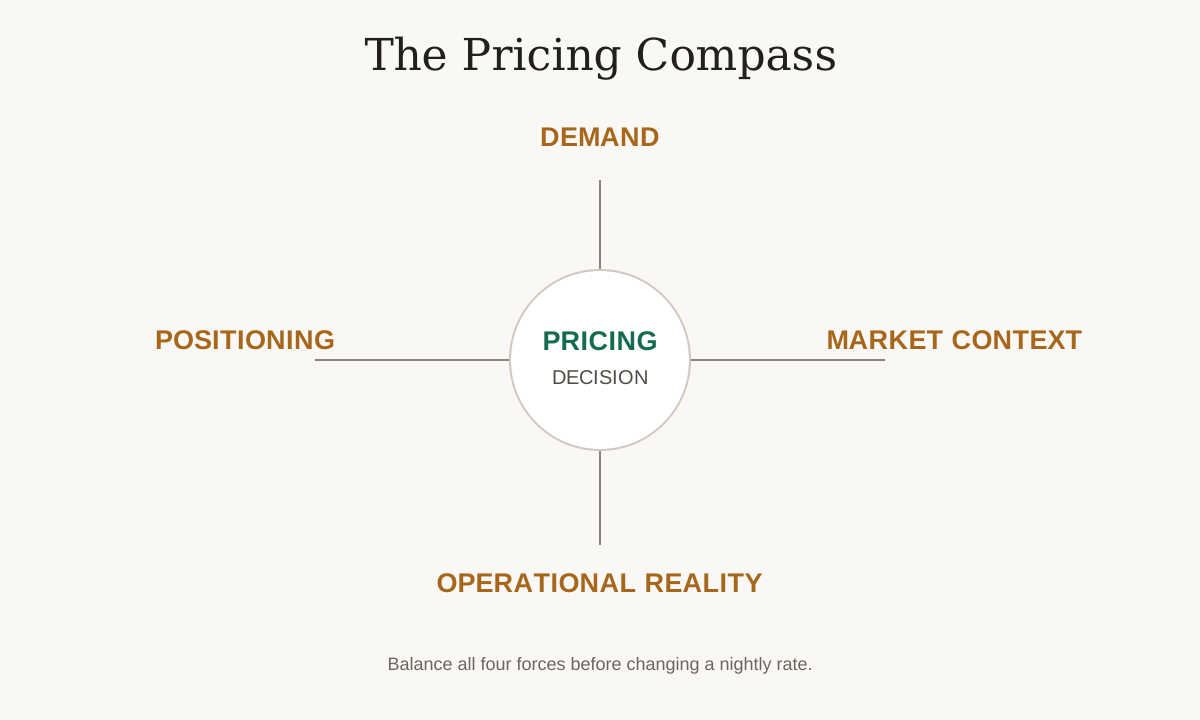
1. Demand
Demand answers the simplest question: How many people want this stay right now?
It changes constantly. Local events, holidays, school calendars, weather, business travel, seasonal tourism, airline capacity, and broader economic conditions all influence how many guests are looking and how urgently they need to book.
When demand increases, pricing power usually increases with it.
When demand softens, however, the correct response is not always to lower the rate. First ask whether the softness is expected. If guests in your market normally book three weeks before arrival, an open calendar eight weeks out may be completely healthy.
Reacting before understanding the booking window is one of the easiest ways to give away revenue unnecessarily.
2. Positioning
Your property does not compete with every listing in the market.
A design-led retreat, a practical family home, a downtown business stay, and a budget apartment may all have two bedrooms, but guests evaluate them for different reasons.
Ask:
- Who is the property designed to win?
- Which trip does it serve particularly well?
- What would make that guest choose it over the next-best alternative?
- Which elements of the experience justify a premium?
The clearer the positioning, the less dependent the property becomes on price competition.
Differentiation creates pricing power.
3. Market context
Pricing never happens in isolation.
Professional operators monitor comparable properties, hotel rates, occupancy patterns, ADR trends, new supply, local events, and shifts in booking behavior.
The keyword is monitor.
Competitors are evidence, not instructions.
If five comparable listings discount aggressively, that tells you something worth investigating. It does not automatically mean your property should follow them. They may be correcting poor positioning, solving a short-term inventory problem, or simply making a bad decision.
Use the market to understand context. Do not outsource your strategy to it.
4. Operational reality
Revenue optimization that damages the operation is not optimization.
Every booking creates work: communication, cleaning, laundry, inspection, maintenance, replenishment, and sometimes service recovery. A calendar that looks exceptional on paper can become expensive if the operating system cannot support it consistently.
This matters especially when lower rates generate a large number of short stays and turnovers.
Sometimes a slightly lower occupancy rate with longer stays and stronger ADR produces better profitability, fewer operational failures, and a better guest experience.
The goal is not maximum occupancy.
The goal is sustainable performance.
Stop chasing occupancy
Occupancy is useful, but it is not a trophy.
Consider two properties.
Property A
- 96% occupancy
- $140 ADR
Property B
- 81% occupancy
- $210 ADR
Which performed better?
You cannot answer from occupancy alone. You would need to understand available nights, fees, operating costs, length of stay, channel costs, and ultimately profit.
This is why reacting to an empty night by automatically lowering price can be dangerous. The booking may increase occupancy while reducing the value of the calendar.
A healthier question is:
What combination of rate, occupancy, and stay pattern creates the strongest economic outcome?
Revenue management is a system. Optimize the system.
Booking pace matters more than calendar anxiety
An empty future calendar feels uncomfortable because it is visible.
Booking pace gives that emptiness context.
If July 15 is eight weeks away, the right question is not “Why is it open?” It is “How booked are we normally eight weeks before July 15?”
Compare current pickup with historical patterns and relevant market behavior.
If you are materially behind pace, investigate. If you are on pace, avoid unnecessary intervention. If you are ahead, consider whether pricing can capture additional demand.
This is one of the most practical ways to replace pricing anxiety with evidence.
Dynamic pricing software is a tool—not the strategy
Dynamic pricing platforms can process more signals, more quickly, than a human operator ever could. That makes them extremely useful.
They can help interpret historical patterns, market rates, seasonality, local events, booking pace, and remaining inventory.
But software does not know everything about your business.
It may not understand why guests consistently mention the backyard in reviews, why a newly opened venue is changing the neighborhood, why your property attracts remote workers midweek, or why a particular date requires more operational margin.
Technology should improve judgment, not eliminate it.
Use automation for consistency and scale. Keep humans responsible for strategy, context, and exceptions.
Avoid the four most common pricing mistakes
Pricing emotionally. Empty calendars create anxiety, and anxiety creates unnecessary discounts. Use evidence before reacting.
Copying competitors. Their cost structure, positioning, goals, reviews, and operating standards may be completely different from yours.
Changing too much at once. If you change price, minimum stay, photography, and promotions together, you lose the ability to understand what worked.
Treating every unsold night as failure. Some nights should remain open until the right part of the booking window. Others may be better protected for higher-value stay patterns.
The common thread is discipline.
Pricing improves when changes are intentional and measurable.
Build a weekly pricing habit
You do not need to redesign your pricing strategy every morning.
You do need a consistent review rhythm.
Once a week, ask:
- Has demand changed?
- Has booking pace changed?
- Are the right comparable properties behaving differently?
- Has our available inventory changed?
- Does the current rate still match our positioning?
- Is there a specific action worth taking?
If nothing meaningful changed, doing nothing may be the best decision.
When you do make a change, document the hypothesis.
For example:
Weekday pickup is 18% behind the normal 21-day pace. Comparable supply has increased, but weekend demand remains strong. Reduce Tuesday–Thursday base rates by 6% for the next two weeks while leaving Friday and Saturday unchanged. Review pickup in seven days.
Now you have an experiment.
You know what changed, why it changed, and when you will review it.
That is far more valuable than repeatedly moving rates until the calendar looks comforting.
Operator checklist
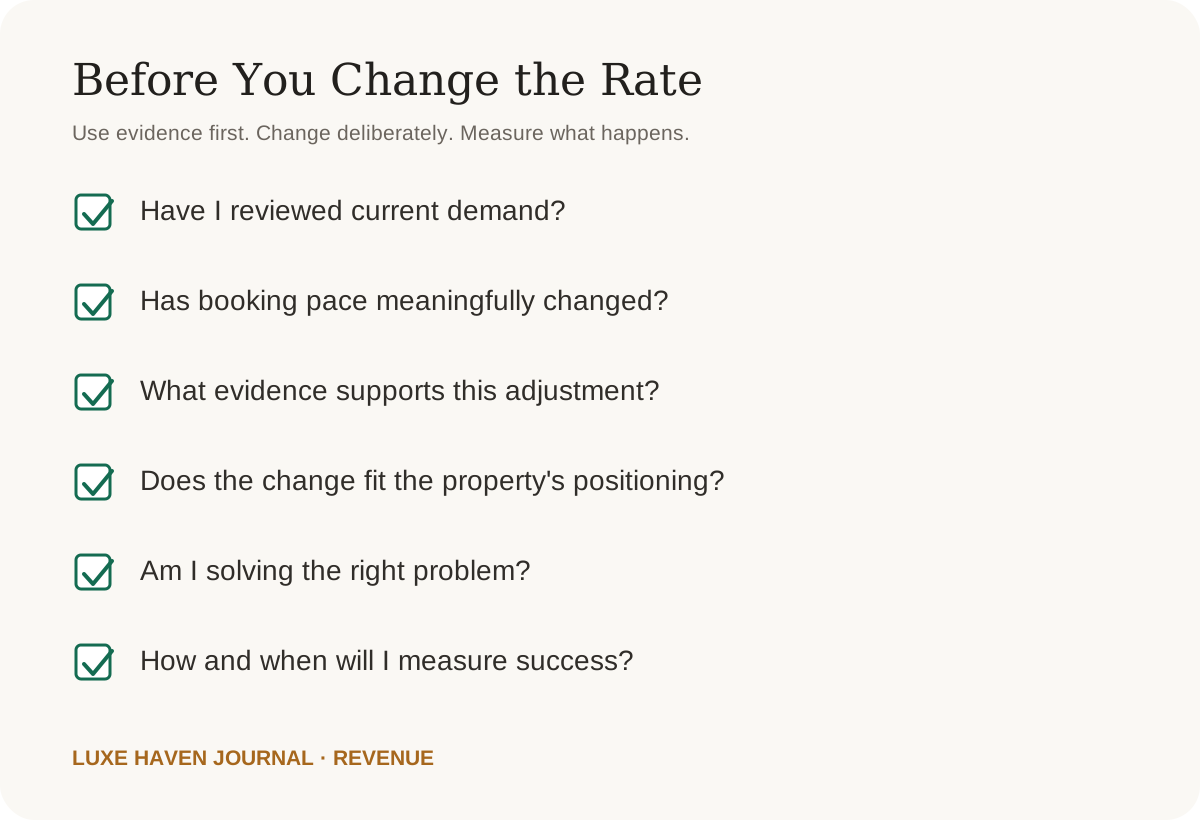
Before changing a nightly rate, confirm:
- You have reviewed current demand.
- Booking pace supports intervention.
- You can explain the evidence behind the change.
- The rate remains consistent with the property's positioning.
- You are solving a pricing problem rather than a listing, inventory, or demand problem.
- You have defined when and how the decision will be reviewed.
If you remember one thing
Dynamic pricing works when it helps you respond intelligently to changing conditions.
It fails when it becomes a substitute for thinking.
Demand matters. Market context matters. Positioning matters. Operations matter. Software matters.
But the advantage comes from connecting those signals to a disciplined decision process.
Do that consistently and pricing stops being something you react to.
It becomes something you manage.
---
Key takeaways
- Pricing is a strategy, not a nightly number.
- Demand should influence pricing without controlling it.
- Positioning creates pricing power.
- Competitors provide context, not direction.
- Booking pace helps separate real problems from calendar anxiety.
- Dynamic pricing software supports judgment; it does not replace it.
- Measure deliberate changes so every pricing decision creates learning.
Continue reading
- How to Price for Events Without Losing Weekday Bookings
- Stop Guessing: Use Data to Make Better Decisions
- Automation That Saves Time and Protects Reviews
Explore revenue
Hospitality Performance Management turns pricing, demand, inventory, and performance signals into clearer operating decisions.