
Stop Guessing: Use Data to Make Better Decisions
The best hospitality operators do not collect more data. They build better decision systems.
Hospitality operators have never had more information.
Property management systems track reservations. Pricing tools monitor rates and demand. OTAs provide conversion data. Review platforms surface guest sentiment. Accounting systems report revenue and expenses. Market providers estimate occupancy, ADR, and competitive performance.
Yet after reviewing all of it, many operators still face the same question:
What should I do next?
That is the information problem hiding inside modern hospitality.
The industry does not suffer from a shortage of dashboards. It suffers from a shortage of decision systems.
Data creates value only when it changes what you do.
At Luxe Haven, that idea sits at the center of Hospitality Performance Management (HPM): continuously improving financial, operational, and guest performance by connecting evidence to decisions, decisions to execution, and execution to learning.
Information does not improve hospitality. Better decisions do.
The information trap
A dashboard can tell you occupancy is down.
That is useful.
It is not yet actionable.
Why is occupancy down?
Perhaps market demand softened. Maybe pricing moved too far above comparable properties. Perhaps the listing is receiving views but converting poorly. A minimum-stay rule may be eliminating potential bookings. New reviews could be changing guest perception. Your historical booking window may simply mean the nights are not expected to fill yet.
Each diagnosis could lead to a completely different action.
This is why reacting directly to the metric is dangerous.
Data is a signal. Diagnosis creates meaning.
If an operator sees falling occupancy and immediately discounts, the business may solve the wrong problem. A listing-quality issue cannot be permanently fixed with lower rates. An inventory problem cannot be solved by reviewing ADR. A service problem may take weeks to appear in revenue, but the warning signal could already exist in guest messages.
High-performing operators look beyond the number.
They ask what the number is trying to tell them.
Stop measuring everything
More metrics do not automatically create more intelligence.
In fact, too much information can make decisions harder.
A hospitality dashboard might contain dozens of measurements, but the operator's attention is finite. When every metric is treated as equally important, meaningful signals disappear inside reporting noise.
A better approach is to begin with the decision.
Instead of asking:
What can we measure?
Ask:
What decision are we trying to make?
If the question is whether pricing needs to change, occupancy alone is insufficient. You may also need booking pace, ADR, comparable rates, remaining inventory, and booking-window behavior.
If the question is why reviews declined, revenue metrics are secondary. Guest messages, incident history, maintenance issues, cleaning quality, and review themes may be far more useful.
The decision determines the evidence.
Not the other way around.
Hospitality Performance Management
Hospitality Performance Management provides a simple operating cycle for turning information into improvement.
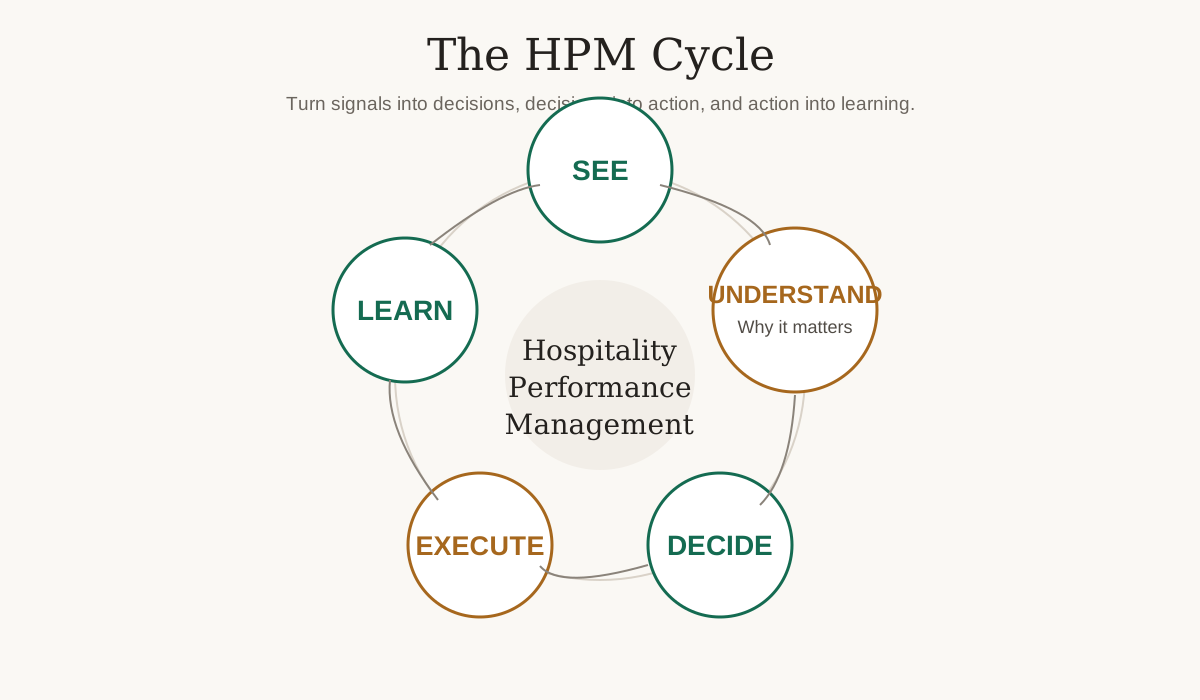
See
Begin with reality.
What changed?
What is performing differently than expected?
What signal deserves attention?
The goal is observation without premature explanation.
Understand
Now ask why.
Compare the signal with market context, property conditions, guest behavior, operating history, and other relevant evidence.
Good diagnosis often requires connecting information that lives in different systems.
Decide
Not every observation deserves action.
Choose the decision with the greatest expected value. Make the assumptions visible. Record the evidence. Understand the confidence behind the recommendation.
Execute
A decision that never changes the operation creates no value.
Assign an owner. Define the action. Establish a date. Make the change.
Learn
Return to the result.
Did performance improve? Was the original diagnosis correct? Should the change become standard practice? What should be done differently next time?
Then begin the cycle again.
That final step is what turns operations into an improvement system instead of a collection of isolated decisions.
From dashboards to decision intelligence
A useful hospitality system should help answer five questions.
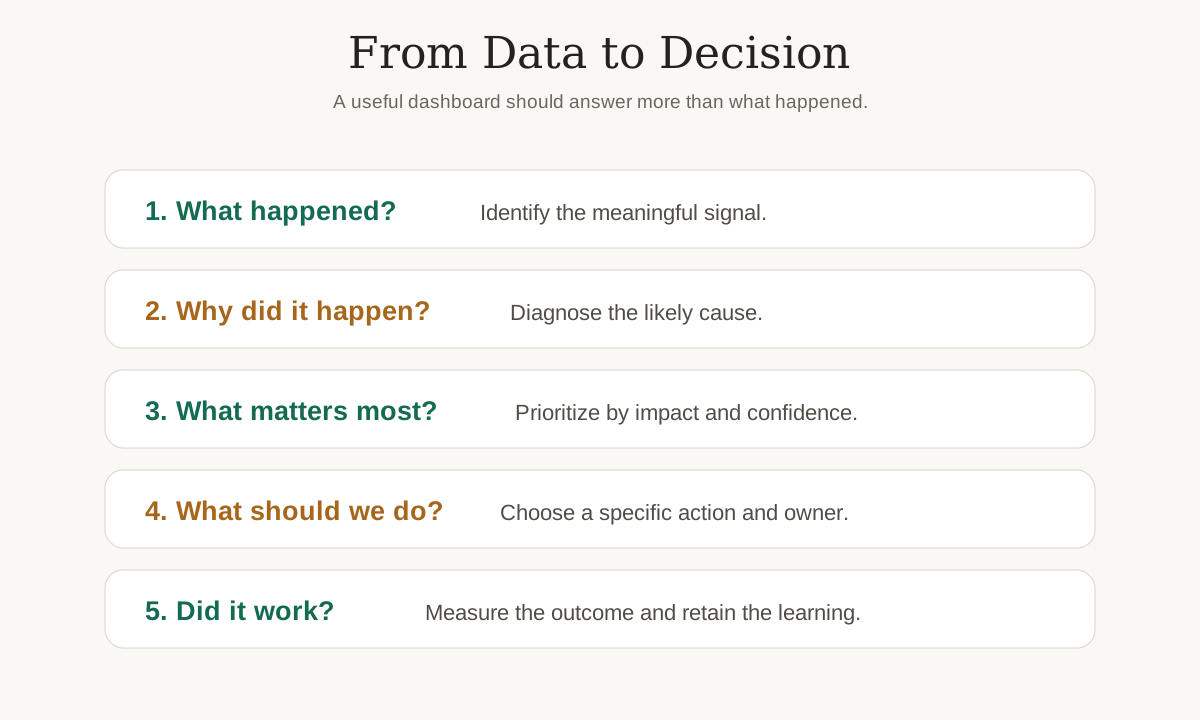
A traditional report may stop after the first question: What happened?
Decision intelligence continues.
If weekday bookings are behind plan, the system should help distinguish among possible causes. It should show why the issue matters, surface the evidence behind the diagnosis, clarify what deserves attention first, and preserve what happens after the action is taken.
That is a fundamentally different relationship with data.
The goal is not simply visibility.
The goal is clarity.
Use confidence, not false certainty
Hospitality decisions are made under uncertainty.
Market data is imperfect. Comparable properties differ. Guest behavior changes. Regulations evolve. Third-party estimates are never exact.
A mature decision system does not hide this uncertainty.
It makes it visible.
For example:
High confidence: Multiple current data sources point in the same direction.
Moderate confidence: Evidence exists, but sample size or comparability is limited.
Low confidence: The recommendation depends heavily on assumptions or incomplete evidence.
This matters because confidence changes how you should act.
A high-confidence operational failure may require immediate intervention.
A lower-confidence revenue opportunity might deserve a small experiment before a large change.
Good operators do not need certainty.
They need to understand what they know, what they do not know, and what evidence would change the decision.
Separate signals from symptoms
One of the most valuable habits in hospitality is learning to distinguish a symptom from its cause.
Low occupancy is a symptom.
The cause might be pricing.
Or demand.
Or conversion.
Or inventory restrictions.
Or guest experience.
A negative review is a symptom.
The cause might be a cleaning failure, unclear instructions, a maintenance issue, or an expectation created by inaccurate listing copy.
Revenue decline is a symptom.
Finding the underlying system that created it is the real work.
This is where cross-functional thinking becomes powerful.
Revenue, operations, guest experience, listing quality, and investment performance are not separate businesses. They are interconnected parts of the same hospitality system.
How Luxe Haven thinks about data
Traditional hospitality technology often begins with the question:
What information can we show the operator?
Hospitality Performance Management begins somewhere else:
What decision does the operator need to make?
Then we work backward to the information required to support it.
That distinction matters.
A beautiful dashboard with no clear decision creates reporting.
A clear recommendation with transparent evidence, confidence, ownership, measurement, and learning creates an operating system.
HPM is not about removing human judgment.
It is about giving judgment better evidence.
Avoid the common traps
Watching dashboards instead of operating the business. Reporting should create attention, not consume all of it.
Reacting to one metric. Most hospitality outcomes have multiple causes. Use context.
Tracking too many KPIs. Measure what matters to the decisions in front of you.
Ignoring confidence. A precise-looking number can still be based on weak evidence.
Failing to record decisions. If you do not know why a change was made, learning later becomes difficult.
Skipping the review. Actions become intelligence only when results are measured.
Operator checklist
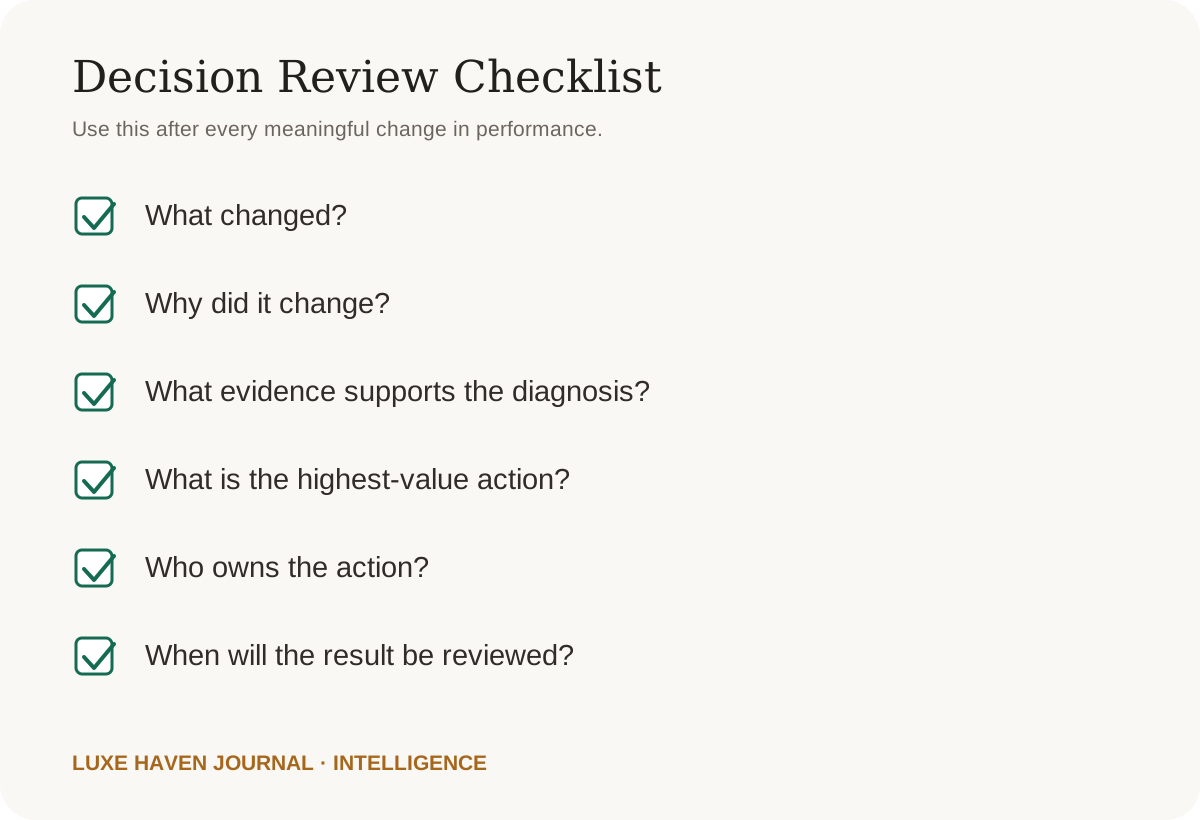
For every meaningful performance signal, ask:
- What changed?
- Why did it change?
- What evidence supports that explanation?
- What is the highest-value action?
- Who owns it?
- When will we review the result?
If those questions become part of your weekly operating rhythm, dashboards begin to serve a different purpose.
They stop being places you visit.
They become tools you use to improve the business.
If you remember one thing
The competitive advantage is not having more data.
Most operators already have enough data to make significantly better decisions.
The advantage comes from building a disciplined system that turns signals into understanding, understanding into action, and action into learning.
That is how hospitality businesses improve.
Not through perfect predictions.
Through better decisions, repeated consistently.
---
Key takeaways
- Data is useful only when it changes a decision.
- Start with the question, then identify the evidence required to answer it.
- Metrics describe symptoms; diagnosis identifies causes.
- Confidence should be visible whenever uncertainty matters.
- Every action should have an owner and review date.
- Learning turns individual decisions into long-term operating intelligence.
Continue reading
- Dynamic Pricing Strategies That Actually Work
- Automation That Saves Time and Protects Reviews
- What Investors Look for in Short-Term Rentals
Discover Hospitality Performance Management
See how Luxe Haven connects market, revenue, operations, guest experience, and investment signals into clearer decisions and measurable actions.